
Talk it through
Describe a process in your own words. Bring an existing file if you have one.
YOUR BUSINESS: EXPLAINED BY YOU. MAPPED BY QUAESTOR.
Tell Quaestor how the work gets done. It turns what you know into a living operating atlas your team can navigate, question, and improve.
Beta opens next month. Start with one process. No consultant required.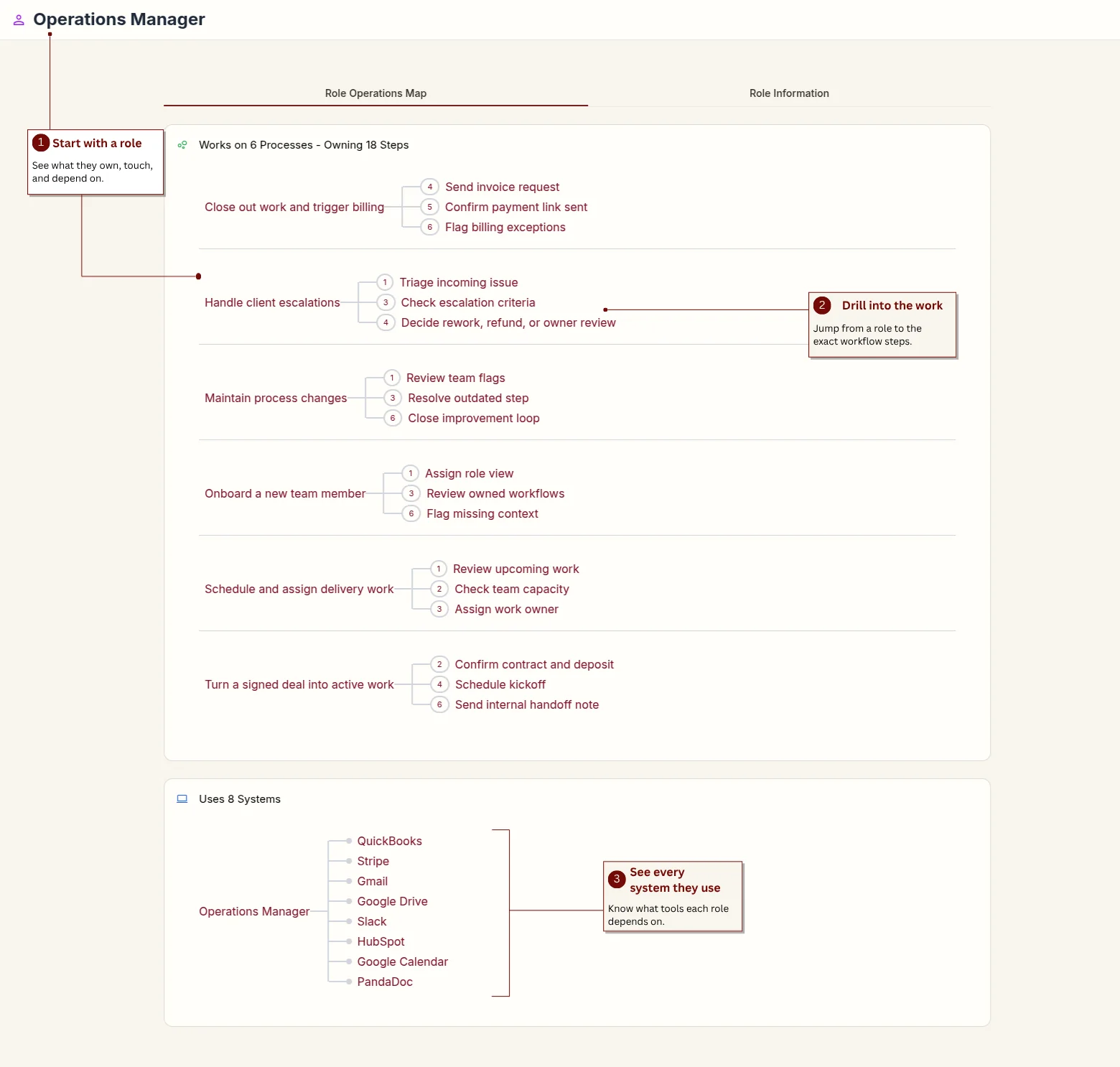
THE REAL OPERATING SYSTEM
The exceptions, judgment calls, handoffs, and workarounds live in conversations and memory. So every question finds its way back to you.
ATLAS BUILDER
You do not need to learn a framework before you begin. Start with the part of the business you know best and just talk about how it works.
Describe a process in your own words. Bring an existing file if you have one.
It identifies the roles, steps, systems, decisions, and handoffs in what you said.
Approve the structure, fill the gaps, and make the model match the real business.
Give each person the view they need to act without routing every question through you.
NOT ANOTHER WIKI
A folder can hold an SOP. It cannot show every process a role performs, every workflow a system supports, or what changes when ownership moves.
Roles perform steps. Steps use systems. Decisions follow rules. Handoffs move ownership.
Start with a person, process, or system and follow the connections to the answer.
Change the model once. Every connected view reflects the same business.
Atlas Builder does not generate another SOP. It builds the connected model beneath every role, process, and system view.
CLARITY IN USE
Give someone the work, the decisions, the tools, and the surrounding context.
New people can follow the work and find the owner of what comes next.
See the processes, roles, and dependencies a change will touch.
Give agents structured operating context instead of a pile of ambiguous documents.
LEGIBILITY FROM WITHIN
Quaestor gives your knowledge structure without taking authorship away from you. The result is not an outsider’s interpretation or a deck that goes stale. It is your operating atlas, shaped by the people who run the business.
The model belongs in your hands because the business does.START WHERE YOU ARE
Choose the work that causes the most questions. Get it out of your head and into a form your team can use.